Cast-iron gas mains and services replaced for network operators — live works, traffic management, customer notifications, service transfers, pressure testing, purge & commission. The work we built the company around, and what we deliver every single day.
Most of our gas work is mains replacement on Cadent's iron-mains programme — replacing ageing cast-iron pipes with new PE.
We also run CCTV camera surveys. Records tell you where a pipe runs; a camera tells you what state it's in, whether the bore is clear before an insertion, and helps to locate services.
Every gas job we touch involves people whose heating, hot water and cooking depend on us getting it right. That's not marketing copy — it's the reason we run our notifications and reconnection process the way we do. Teams trained to talk to householders. Appointments kept. Sites cleaned before we leave.
Safety comes before production on this contract, and that isn't a slogan — it's why we treat the standards as a minimum rather than a target. Operatives are trained and accredited.
LP · MP · service laying · live insertion · pressure test · purge & commission.
What we aim for on every street, and how our performance is judged.
The trades that make up a mains replacement, from the dig to the camera survey.
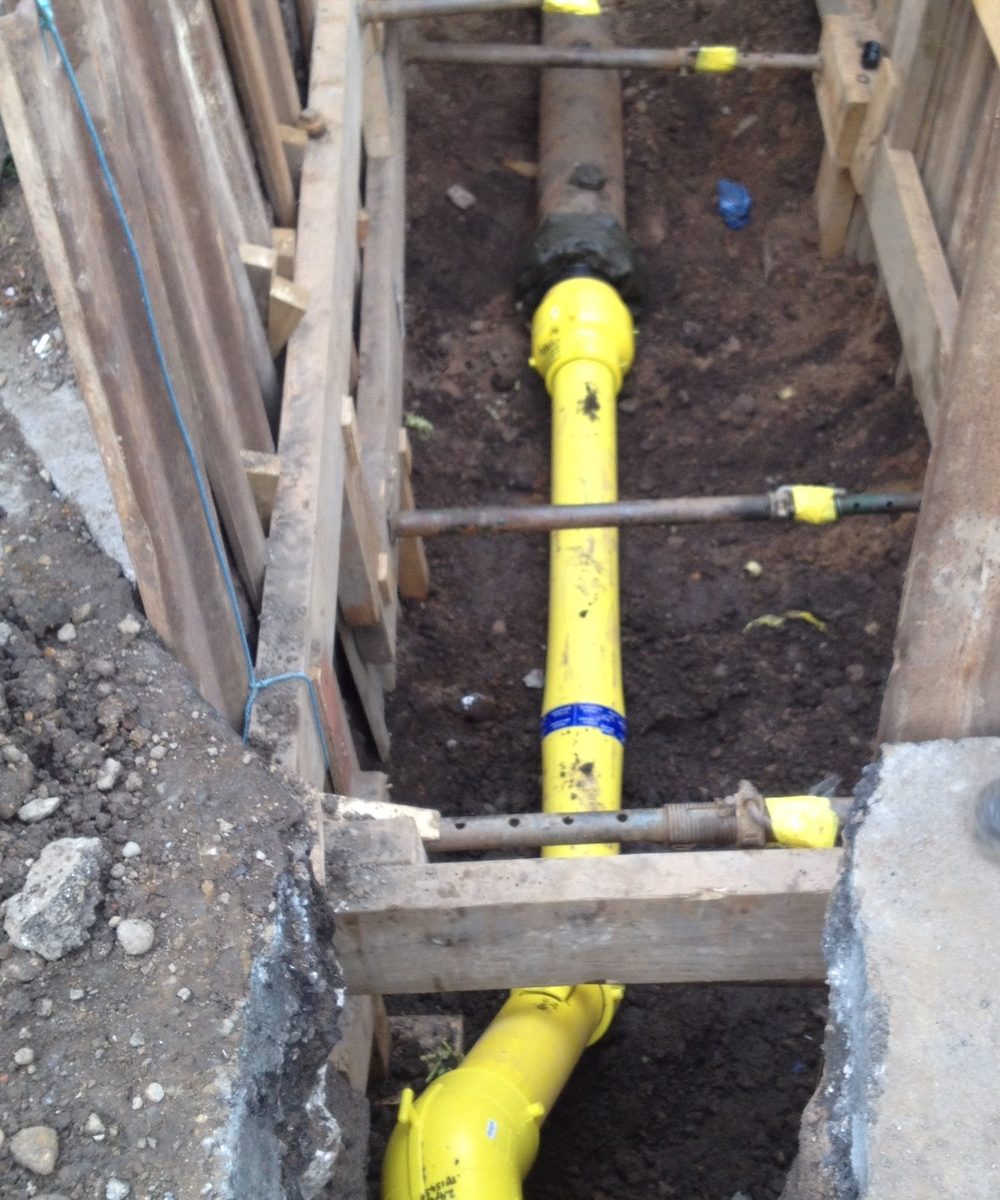
Ageing cast-iron main taken out of service and replaced with PE, service tees set in as the run goes down. Trench shored, main laid to depth, services transferred street by street.
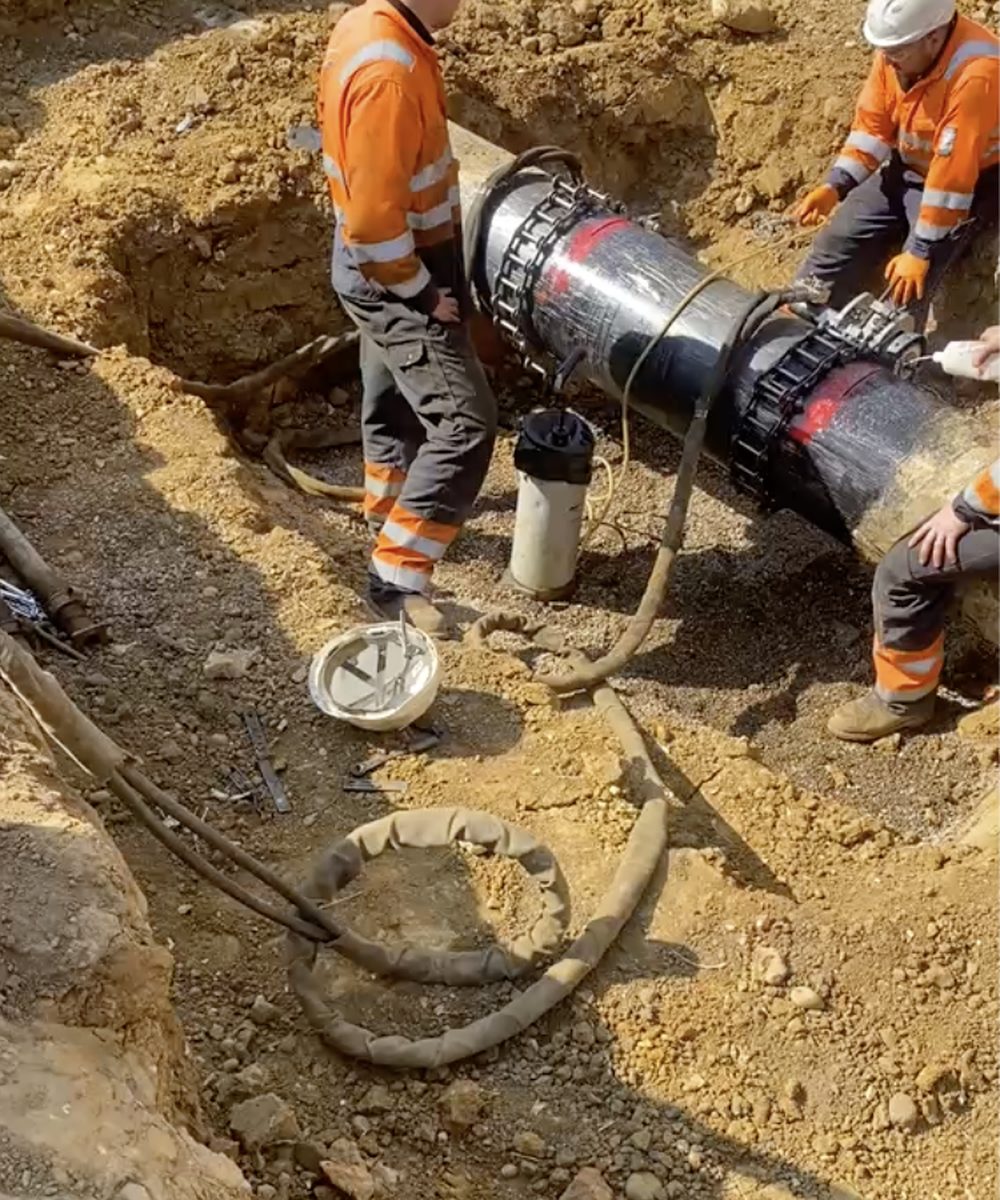
Mechanical couplings and split tees fitted to medium-pressure main. Joints made up, torqued and leak-checked before the section is brought back into service.
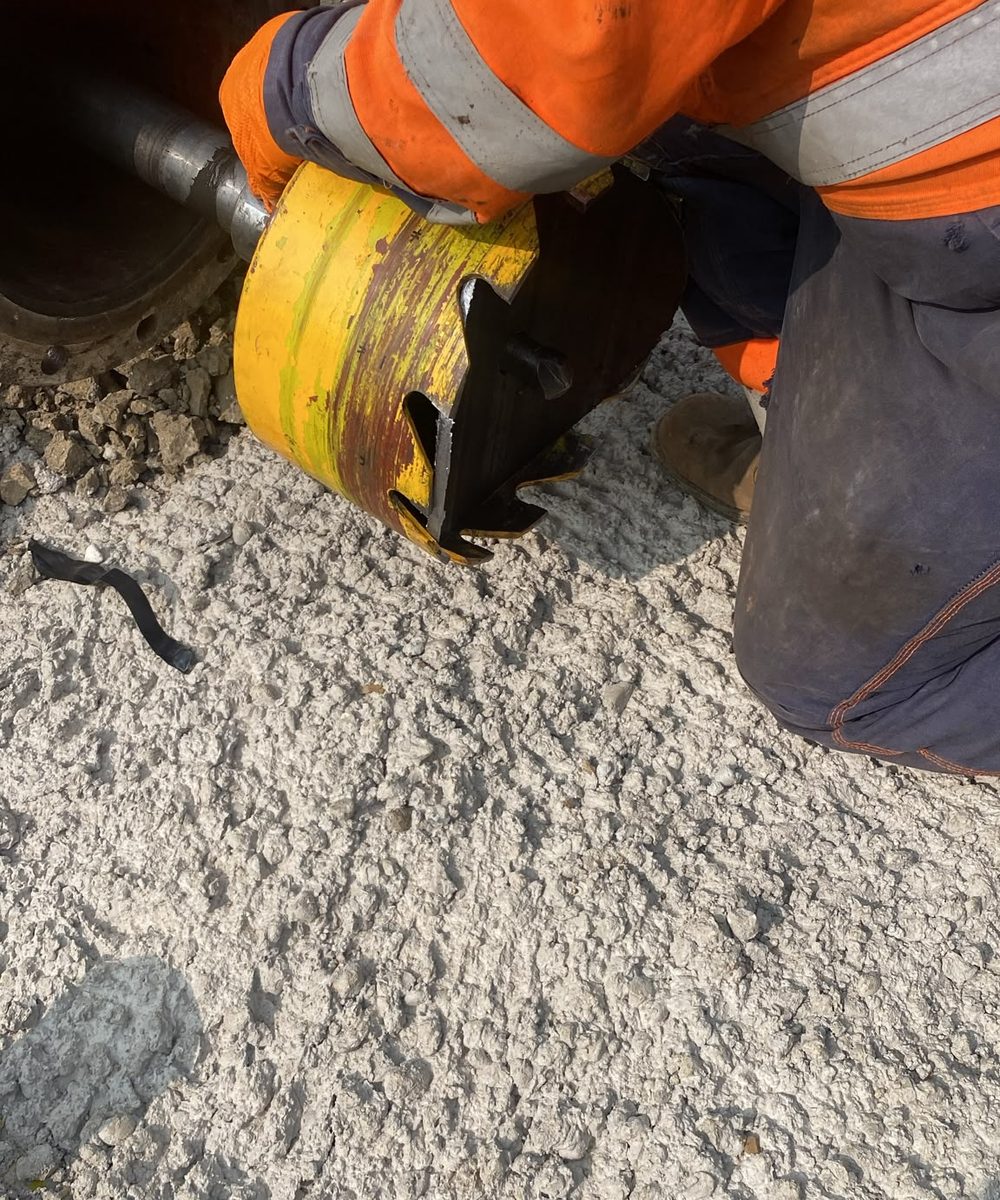
Drilling machine mounted on the live main so a new connection can be made without shutting anybody off. The supply stays on while the tapping is cut and the coupon recovered.
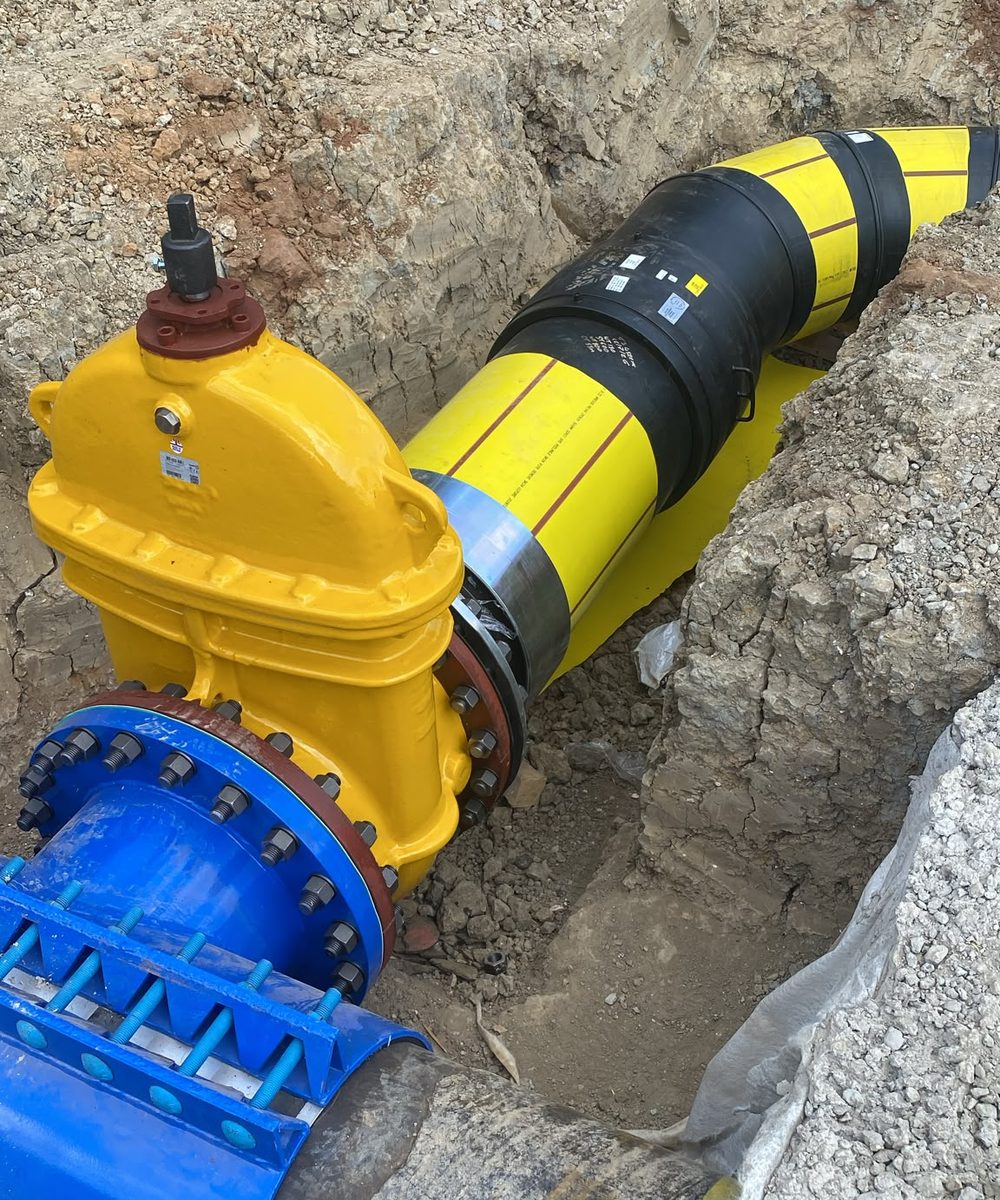
Valves set into the run so sections of main can be isolated cleanly in future — for planned work or in an emergency. Flanges made up, valve set to level, chamber and cover to follow.
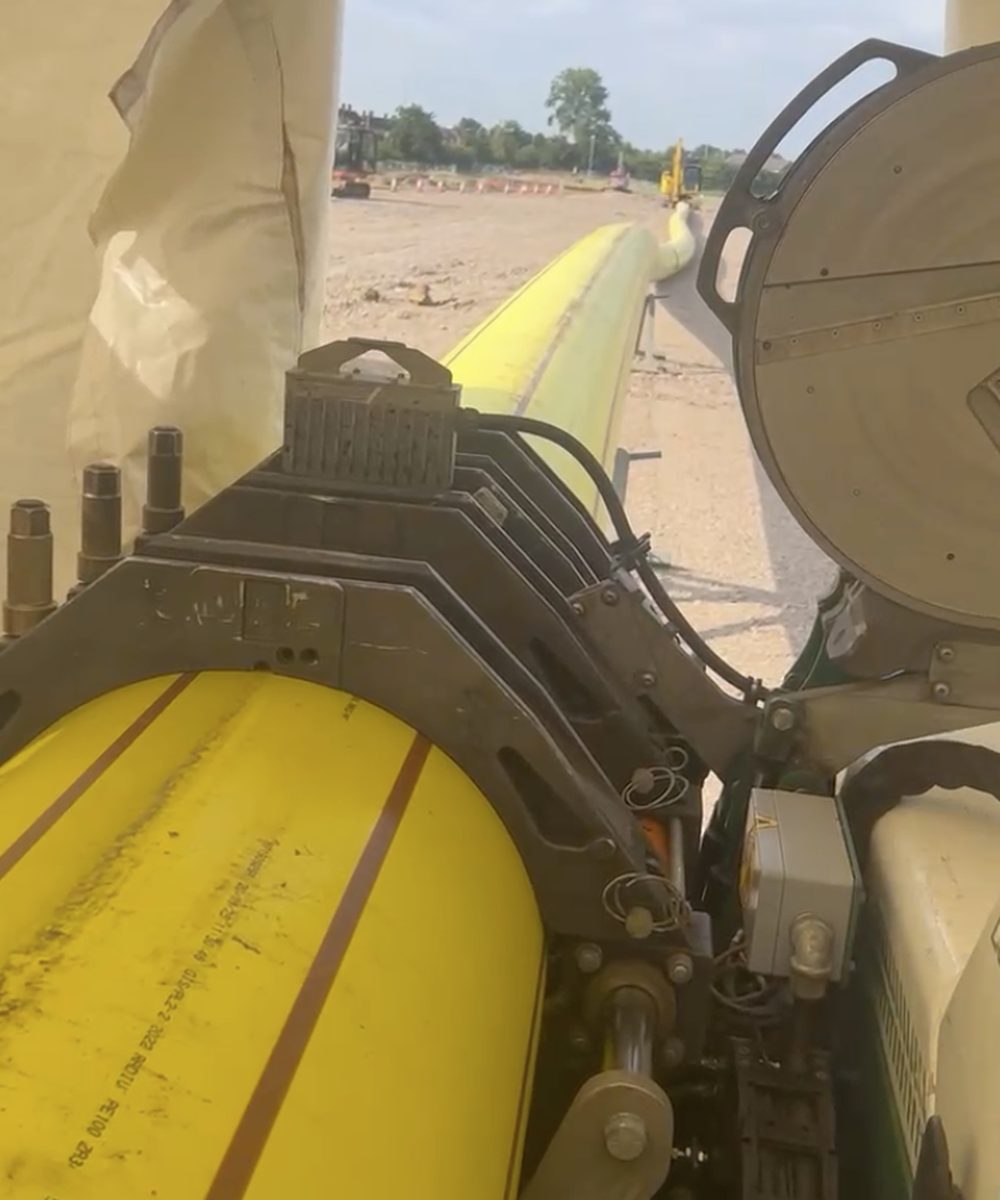
Lengths of PE welded end to end in the fusion machine. Pipe ends faced, heated and held under pressure to a set cycle, so the joint ends up as strong as the pipe either side of it.
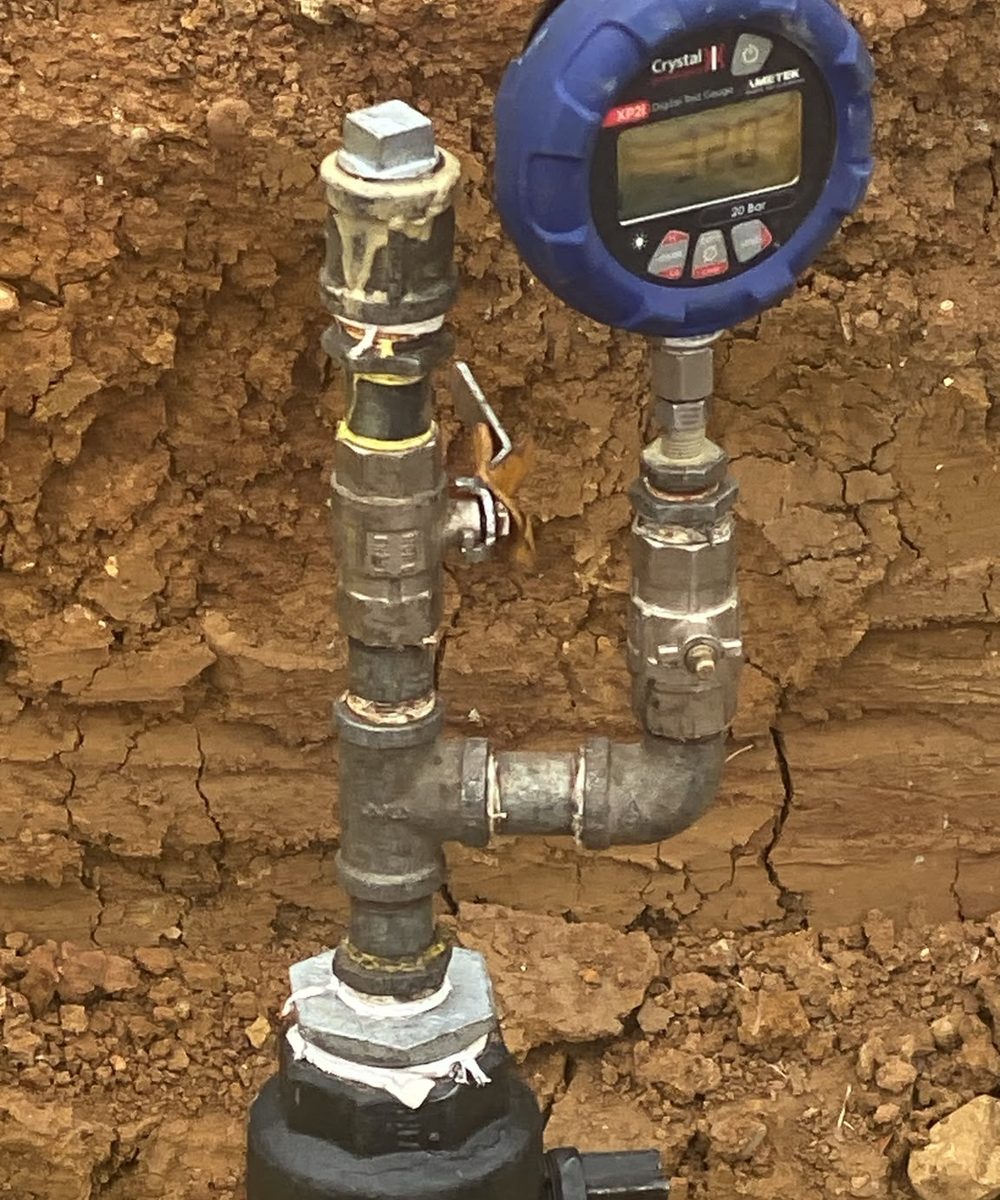
Every new section is put under test and held before anybody gets gas through it. Gauge on, pressure up, watched for the full duration — the reading is the evidence the joints are sound.
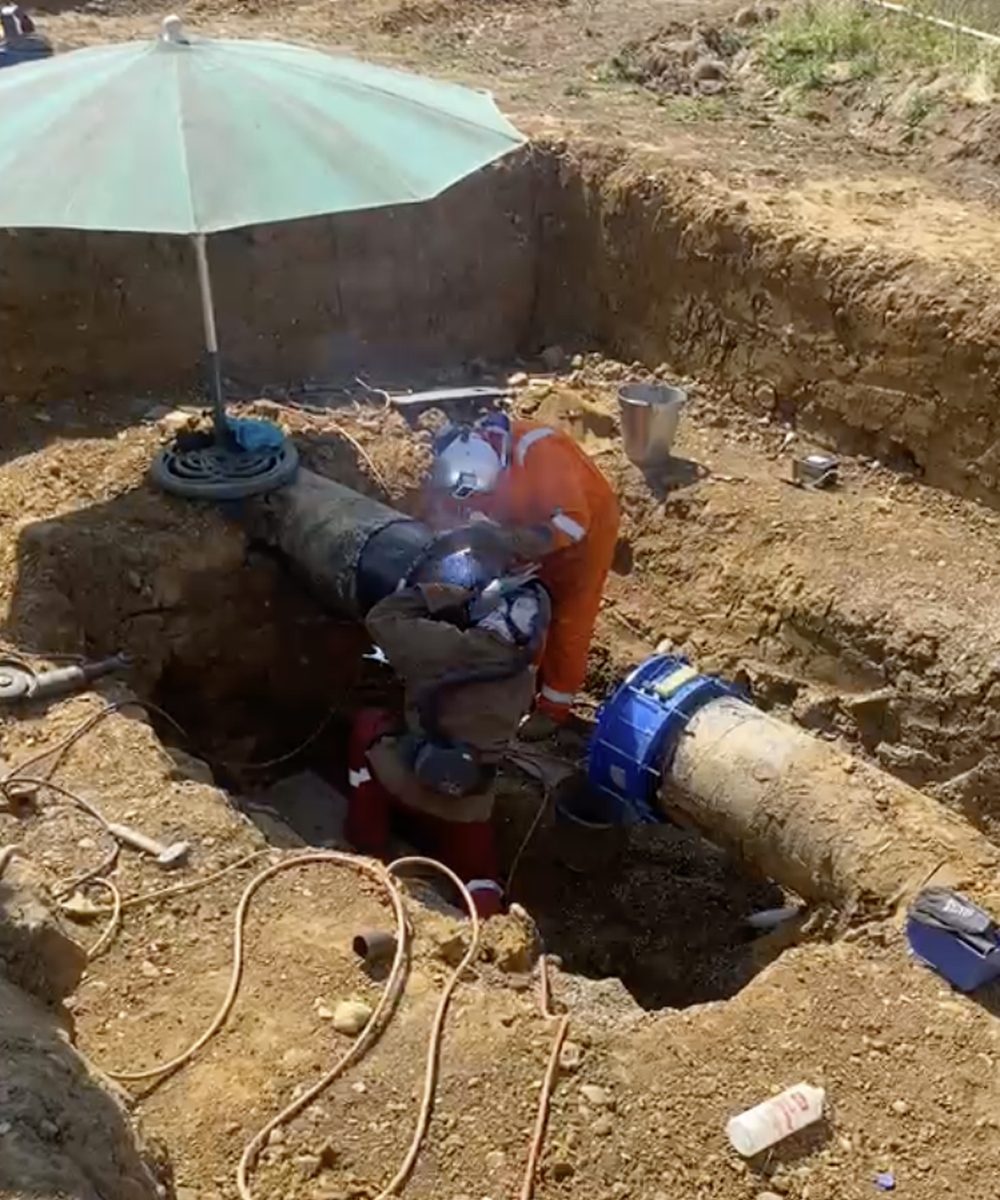
Cutting and welding on steel main, carried out under a hot works permit with the atmosphere monitored and the excavation kept clear. Shaded and screened so the operative can see the weld.
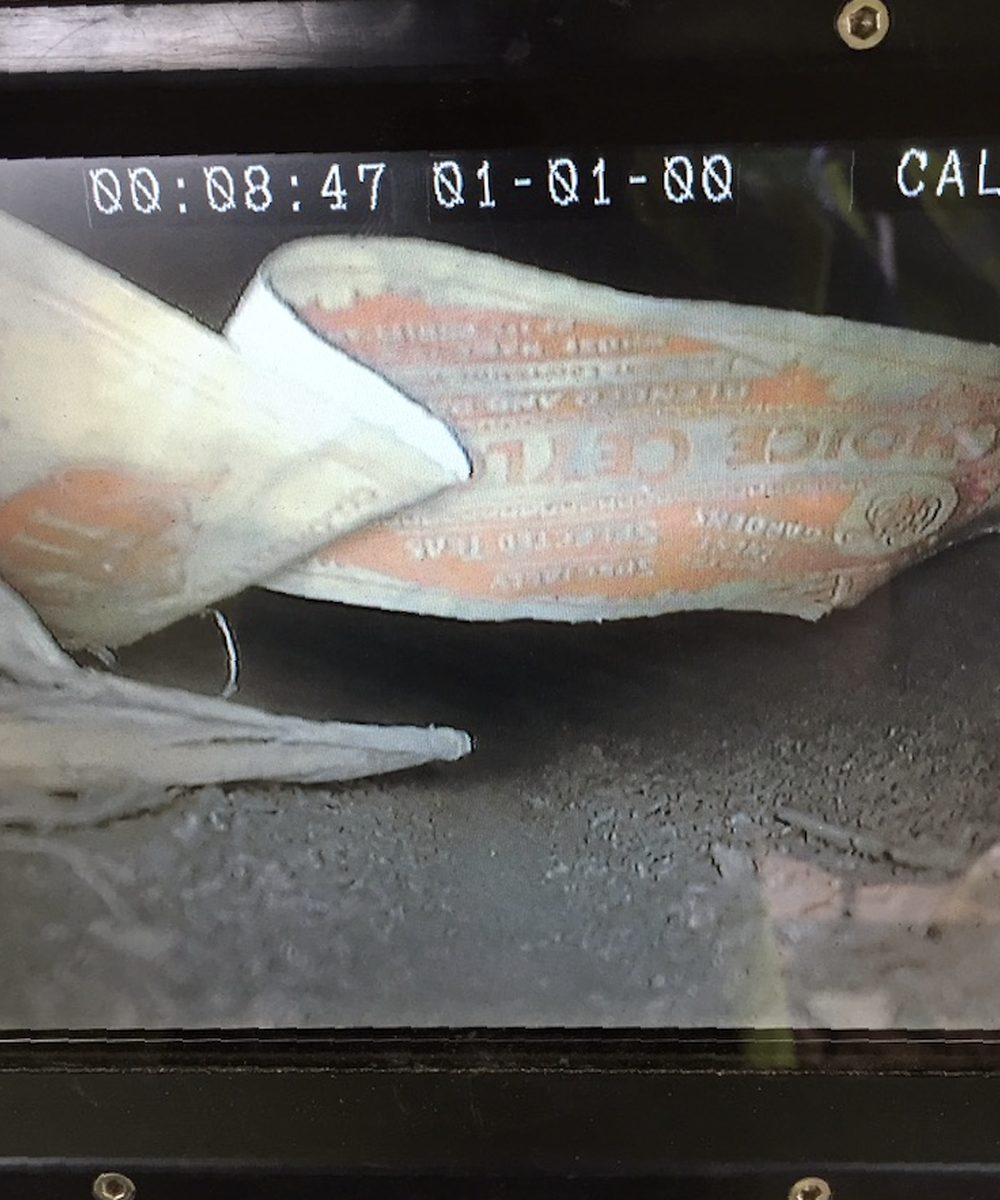
Camera run through the main to see what the records can't tell you — the condition of the bore, what is left inside it, and whether it is clear for an insertion.
Gas is the core, but the same teams close the loop on highway reinstatement, our Vac-Ex units are available for hire across the East Midlands, and our grab lorries keep the muck moving.